


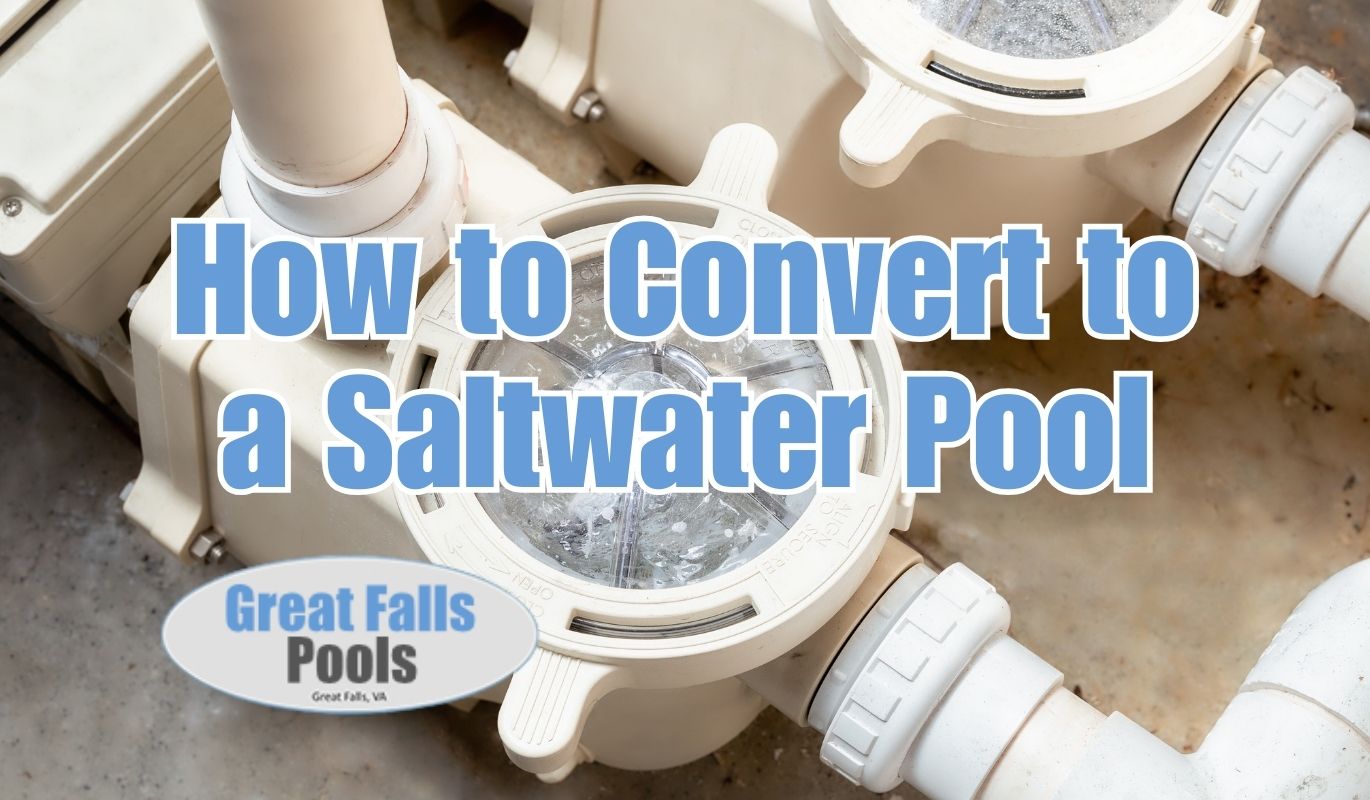
If you’re wondering how to convert to a saltwater pool, Great Falls Pools is here to help. We install and maintain saltwater pool systems throughout Northern Virginia, including McLean, Vienna, Oakton, Burke, Falls Church, Arlington, Sterling, Loudoun County, Fairfax County, as well as Northwest DC and Potomac, Maryland. A saltwater pool offers a low-maintenance, comfortable, and cleaner alternative to traditional chlorine pools.
Why Choose a Saltwater Pool?
Saltwater pools offer many benefits. You’ll enjoy gentler water, fewer harsh chemicals, and lower long-term maintenance. With the right salt chlorination system, your pool stays clean and balanced without storing chlorine tablets or liquid bleach.
Understanding Saltwater Pool Systems
Saltwater swimming pool systems use a salt chlorinator to convert salt into chlorine. The system includes a salt cell, which produces a steady flow of chlorine to sanitize your pool. Unlike standard chlorine pools, saltwater pool systems offer smoother, more consistent water quality.
How to Convert to a Saltwater Pool
To start, we inspect your existing setup. Then we remove your traditional chlorination equipment and install the new system.
- Step 1: We test the water and balance pH, alkalinity, and calcium levels.
- Step 2: We install a compatible salt chlorinator system and salt cell.
- Step 3: We add salt, usually around 2,500 to 3,500 ppm, depending on your system’s requirements.
- Step 4: We confirm proper flow, inspect electrical connections, and set your desired chlorine levels.
The full conversion process is quick, often finished in a day or two.
Saltwater vs. Chlorine Pools
When comparing a chlorine pool vs. saltwater, many homeowners prefer the benefits of saltwater pools. Saltwater is softer on skin, eyes, and swimsuits. You’ll reduce chlorine exposure while keeping your pool clean and safe. Saltwater systems also produce fewer odors and eliminate the need to store harsh chemicals. Additionally, according to The Spruce, “Without caustic chlorine, swimsuits and towels last longer and keep their colors longer with saltwater pools.”
Ongoing Maintenance for Saltwater Pools
Saltwater pools still require care, but fewer chemicals. You’ll need to:
- Monitor salinity and add salt as needed.
- Inspect and clean the salt cell every 3–6 months.
- Test water weekly to keep balanced pH and alkalinity.
Our team offers regular service plans to help you maintain optimal performance year-round.
The Pros and Cons of Saltwater Conversion
Saltwater pools are ideal for many homeowners. However, it’s important to understand both the benefits and challenges.
Pros:
- Softer water
- Lower chemical costs
- Less frequent chlorine adjustments
Cons:
- Higher upfront equipment cost
- Some surfaces and metals may corrode without proper care
We’ll help you weigh the pros and cons of saltwater conversion to decide if it’s the right fit.
Start Your Saltwater Conversion With Great Falls Pools
Still wondering how to convert to a saltwater pool? We make the switch easy, efficient, and long-lasting. Great Falls Pools proudly serves residential clients across Northern Virginia, Northwest DC, and Potomac, MD. Contact us today to learn more about saltwater pool systems, get a quote, and upgrade your swimming experience.